Barbados is often remembered for sugar and plantations. Still, beneath that surface, another economy took shape — one built by enslaved and free Black Barbadians who traded, saved, and governed value in spaces of their own making. Through provision grounds and carefully organised markets, Barbados developed a working economic system that shaped everyday life on the island and quietly influenced the wider Caribbean. This was not a footnote to the Barbados identity and plantation history, but a parallel economy — disciplined, resilient, and enduring.
Historians now recognise Barbados as a prototype for plantation capitalism, and provision grounds were its quiet, ingenious foundation. Despite their scarcity and poor soil, these plots created:
- A parallel, African-rooted economy operating beneath colonial control
- A tradition of market organisation and price-setting led by enslaved and free Black women
- A culture of saving, reinvesting, and self-sufficiency
- Early forms of Black property rights, even within enslavement
Eleanor Marie Brown’s landmark research reveals that provision grounds effectively created the largest class of “property-lite” Black landholders in the Americas.¹
These were not formal legal rights — but in practice, enslaved people controlled the land’s output, managed their households, built savings, and wielded economic influence.
In a world designed to erase their agency, they built a system that preserved it.
The Wealth of Markets — and the Birth of Bajan Enterprise
Travellers in the 18th and 19th centuries were astonished by Barbados’s markets: vibrant, disciplined, and dominated by Black vendors who set prices, undersold the plantations, and circulated their own trade networks.
This was not a marginal economy — it was profitable.
Jerome S. Handler notes that during Barbados’s era of sugar supremacy, the provisioning economy generated more revenue per capita than all American colonies combined.²
Imagine that.
Enslaved Black Barbadians, barred from formal power, created one of the most efficient internal economies in the hemisphere.
This is the root of the Bajan reputation for:
- thrift
- ingenuity
- market savvy
- stubborn independence
It did not emerge after emancipation — it was forged in resistance, adaptation, and the will to survive.
From Provision Ground to Chattel House
There was one catch: enslaved people had no right to the land itself.
As long as they remained on the plantation, the plot was theirs to use.
If they left, they lost everything.
And so, Bajan innovation met colonial limitation.
They built movable houses — chattel houses — raised on coral stones so they could be lifted, taken apart, transported by donkey cart, and rebuilt anywhere.
A house that could move because the people could not.
A home that preserved dignity in a system designed to take it away.
A Cultural Through-Line
Provision grounds shaped Barbados in ways that still echo today:
- They seeded the island’s early freeholder class
- They nurtured the ethos that built modern small business culture
- They empowered women as economic anchors
- They preserved African cultivation and trade traditions
- They laid the groundwork for community-based wealth building
They are the missing chapter in Caribbean identity — the story of how a people denied freedom built an economy of their own beneath the plantation system that sought to erase them.
These grounds were not simply gardens.
They were the birthplace of Bajan character.
FOOTNOTES
¹ Eleanor Marie Brown, “On the Evolution of Property Ownership Among Former Slaves, Newly Freedmen” (2016).
² Jerome S. Handler, Unappropriated People: Freedmen in the Slave Society of Barbados (2009).
Video
RoguesCulture Manifesto
— Series Overview
-
- RoguesCulture Manifesto — Reflection over Retribution (Video 1)
The founding statement of the RoguesCulture philosophy — a call for clarity and conscience in a world driven by outrage. - How to Stay Human in a Modern World — A Practical Guide (Video 2)
Simple, mindful steps to stay grounded, compassionate, and clear-minded amid digital noise. - The RoguesCulture Manifesto Explained — Finding Clarity in the Chaos (Video 3)
A deep dive into the Humanity First philosophy and the meaning of reflective rebellion.
3A. Black Swans & RoguesCulture – The Unexpected Path to Reality (Vid 3A)
How spontaneous disruption is shaping the new frontier — in the language of Rogues and Black Swans.
3B. Chaos-is-a-Virtue- It is a first step in discovering truth and reality (Vid 3B)
Clarity rises from within chaos, rising past confusion to true insight - Five Social Commentary Trends Eroding Our Culture (Video 4)
A clear look at the forces that distort our culture, fuel division, and shape how we see ourselves in the modern world. -
Cultural Identity — Final Chapter of the RoguesCulture Manifesto (Video 5)
Where clarity turns inward. A reflection on who we are, what shapes us, and why identity becomes the anchor for staying authentic in a noisy world. -
Manifesto Deep Dive — Summary & Purpose (video 6)
Why the RoguesCulture Manifesto Mattersb This episode explores the philosophical foundation beneath the RoguesCulture series.
It reflects on cultural identity, history, belonging, bias, discrimination, and the ethical questions of reflection.responsibility, and restitution.The Manifesto is not a set of instructions, but a framework for thinking—an invitation to pause,question inherited narratives, and examine how history continues to shape identity in the present.
This Deep Dive closes one chapter of the series and opens the next.
—>The following series turns its focus to Identity, beginning here:
starting at https://roguesinparadise.com/spoils-of-identity-in-the-face-of-colonialism
- RoguesCulture Manifesto — Reflection over Retribution (Video 1)
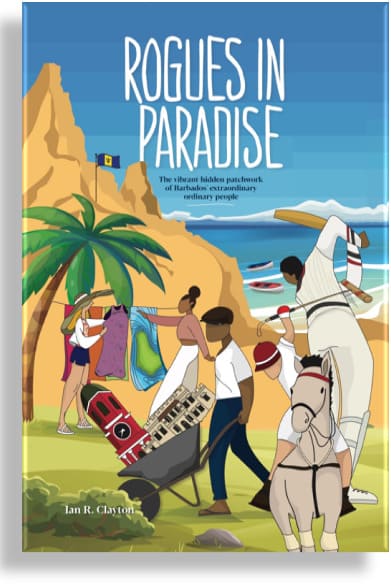
Inspired by Rogues in Paradise
RoguesCulture grows from the roots of Rogues in Paradise, continuing its mission to celebrate humanity in all its contradictions — to explore truth with heart, and to choose reflection over retribution.
🌴 Be part of the story!
Download a free sample chapter of Rogues in Paradise and get your exclusive invitation to the book launch.

📘 Download your free chapter and receive an exclusive invitation to the launch event.
Follow Us — and Join the Journey
🌐 Dive deeper: read more in our
RoguesCulture Blogs
🎙️ Join the conversation: watch and subscribe on our
YouTube Podcast