RoguesCulture Manifesto Deep Dive: Identity, AI, and Humanity in a Changing World.
We are living through a period of rapid technological and social disruption. Artificial intelligence is reshaping culture, identity, and stability beneath the surface of everyday life — changing how we work, communicate, and create value.
In this environment, outrage is easy. Reaction is rewarded. Anger spreads faster than understanding. The RoguesCulture Manifesto emerged as a response to that — an exploration of whether reflection, awareness, and conscience still have a place in how we see one another and live in a changing world.
The Deep Dive is not a summary of the manifesto — it is the why beneath it. It looks at how identity, history, belonging, and memory shape our choices, our judgements, and the ways we include or exclude one another. It asks what happens when we slow down long enough to notice our assumptions — and the harm they can cause — and when we begin to recognise the quiet humanity in others, even across difference.
Barbados — A Small Island with Lessons for the World
Barbados matters in this conversation because it was the world’s first slave society in the colonial plantation system; a place where race, power, identity, and survival were not abstract ideas, but daily realities. It was a society built on hierarchy, enforced difference, and the invention of racial categories that justified exploitation.
A Template for the World
A living classroom where identity, memory, dignity, and survival coexist.
The island became a template that spread across the Atlantic world. What was created there — systems of control, racial belief, social structure, and inherited inequality — did not disappear when slavery ended. These patterns resonated through law, economics, culture, religion, and everyday ways of seeing other human beings.
Barbados is therefore not only a historical setting. It is a living classroom where we can see how identity is shaped by history — and how stereotypes, bias, dignity, humour, resilience, and survival coexist within the same human story.
This Deep Dive does not revisit the past to assign blame, but to understand how patterns formed, how they were absorbed into the social imagination, and how traces of those patterns still influence behaviour and perception today. The lessons are not confined to the Caribbean. They speak to Africa and its diaspora, to Canada, Britain, Europe, and America — to every society touched by empire, displacement, migration, and inherited power.
Barbados reminds us that racism is not only an individual act of hostility. It is also something learned, repeated, internalised, and normalised across generations — even by people who consider themselves fair and well-meaning. Understanding this history does not erase accountability; it deepens awareness of where responsibility lives now.
The island teaches something else as well: that within oppression and fracture, people still created meaning, humour, culture, faith, community, rebellion, and identity. These human qualities are not sentimental — they are forms of survival and defiance. They reveal the complexity of lived experience, far beyond stereotype. Barbados shows us that identity is never neutral — it is shaped by power, history, memory, and the need to belong. When we understand this, we begin to see others — and ourselves — with greater honesty.
Humour in Provocation
The Deep Dive explores how humour, resilience, misunderstanding, pride, injury, compassion, and survival coexist within identity, and how acknowledging this complexity can help us see more clearly. It also speaks to race, bias, and stereotyping — not through argument, but through awareness. It reflects on how we learn to “fit,” how we try to belong, and how, without intending to, we can wound others through assumptions, judgments, or inherited prejudices. It asks us to consider how identity shapes perception—and how perception shapes behaviour.
This episode is an invitation to pause before we react. To look again before we judge. To recognise that history lives inside people — and that understanding this does not excuse injustice, but helps us confront it with clarity instead of hostility.
Reflection is Not Passive
It is ethical. It is a practice of noticing:
where bias lives,
where care is missing,
where humour protects,
where memory hurts,
where dignity survives.
The Deep Dive is the space between noise and meaning — the place where we begin to ask who we are, how we came to be this way, and how we might act differently when we finally understand the cost of not seeing one another fully.
Habits of Perception
One teacher once spent months working with students on race, stereotyping, and how to respond to harmful remarks — thoughtful work, full of empathy and practical guidance. When she returned a year later, she asked whether it had helped. The students said something quietly devastating: “You were teaching the wrong people. It isn’t us who need this — it’s the teachers, the leaders, the adults in charge.” Even well-meaning people can get it wrong — not out of hatred, but through habits of perception, inherited bias, and unquestioned authority. The Deep Dive asks us to look not only outward at “the problem,” but inward at where responsibility lives — especially among those who shape classrooms, workplaces, communities, and stories.
The Journey Turns Inward
From here, the conversation will turn to identity — not as a label or category, but as grounding, conscience, belonging, and self-awareness. Over the coming weeks, that exploration will continue through a series of reflective essays, each stepping deeper into how identity is lived, contested, inherited, reshaped, and re-imagined.
For now, this Deep Dive marks the moment where the manifesto becomes personal.
It is a call to listen — to others, to history, and to ourselves.
Purpose and Matter
The RoguesCulture Manifesto Deep Dive is not a philosophical exercise alone. Its purpose is to help us recognise how identity, history, and inherited social patterns shape the way we see one another — and how bias, stereotyping, and subtle forms of discrimination can persist even among people who believe themselves fair-minded.
Racism is not always loud or intentional; often it lives in assumptions we don’t question, frameworks we inherit, and habits of perception we mistake for truth.
Good people can still cause harm — not out of hatred, but out of unexamined certainty. The Deep Dive invites us to slow down long enough to notice where those blind spots live, and how they influence judgment, belonging, exclusion, and power.
Reflection here is not passive. It is ethical work.
It asks us to examine ourselves with honesty, to listen more carefully to the experiences of others, and to recognise how our reactions, words, and social environments can wound — even when we intend no harm.
Understanding identity in this way does not reduce responsibility — it deepens it. It provides language, awareness, and moral grounding so that we can challenge harmful assumptions before they shape behaviour — and choose empathy, curiosity, and dignity instead.
This is what the Manifesto seeks to do:
not to accuse, not to correct, but to help us see more clearly — and act more humanely — in the world we share.
Looking Forward: Identity in a Shifting World
“Updated January 2026”
The Technology Imperative
As we extend this exploration into the age of rapid technological change and shifting social structures, RoguesCulture also examines how emerging forces such as artificial intelligence, the transformation of work, and the experience of displacement will influence identity and belonging. Our purpose remains the same: to equip truth-seekers with clarity, context, and humanity as they navigate a fragile future together.
Beyond Philosophy
The series explores culture and identity as living systems — fragile, adaptive, and constantly under pressure. It exists to help people recognise how identity, history, and inherited social patterns quietly shape the way we see one another — and how bias, stereotyping, and subtle forms of discrimination can persist even among those who consider themselves fair-minded.
It examines how social structures are being reshaped by rapid technological change, artificial intelligence, economic disruption, and global displacement — and how these forces are altering not only how we work, but how we understand who we are.
Conversing With AI
As these pressures reshape identity and social structures, technology — especially artificial intelligence — now enters the cultural conversation as both a disruptor and a potential catalyst for human growth.
As jobs disappear, communities fragment, and traditional sources of stability weaken, many people experience a growing sense of disorientation and loss of meaning. This is not a distant future — it is already unfolding. RoguesCulture addresses this moment directly. It asks how identity survives disruption, how dignity is preserved in times of uncertainty, and whether societies can maintain human values while navigating technological acceleration.
At the same time, artificial intelligence is not only a disruptive force. Many believe it will enhance human productivity, reduce repetitive labour, and create new forms of work that require creativity, judgment, and emotional intelligence. If guided responsibly, these tools could expand access to education, lower barriers to entrepreneurship, and allow people to focus more on meaningful, human-centred tasks.
The challenge, then, is not simply whether technology advances, but whether societies choose to shape its use ethically — ensuring that efficiency does not replace dignity, and innovation does not outpace compassion.
Purpose and Reflection
The purpose of the podcast series is not to provide easy answers, but to create space for reflection, clarity, and cultural resilience. It offers listeners tools to think more critically about power, belonging, and responsibility — and to prepare psychologically and ethically for a future that will demand adaptability, empathy, and moral awareness.
Ultimately, RoguesCulture is about helping people remain human in an age of rapid change: grounded in history, conscious of inherited bias, alert to emerging challenges, and capable of shaping a future rooted not only in innovation, but in compassion and shared responsibility.
RoguesCulture exists to explore these questions openly — not to provide fixed answers, but to build shared understanding. If we are to navigate a fragile future with clarity and compassion, it begins with conversation, reflection, and the willingness to rethink what it means to remain human in a changing world.
Watch RoguesCulture Manifesto – Identity Meets AI
See the Full 17 min Deep Dive PODCAST
Share Your Stories and Reflections
RoguesCulture is not a monologue. It is a shared space for reflection. If you have a story, question, or experience that has shaped how you see identity, culture, or belonging, I invite you to contribute. Your voice matters here.
You can share:
– A moment that changed how you see identity
– A family story that shaped your sense of belonging
– A cultural misunderstanding that taught you something
– A question you’re still wrestling with
https://stories.roguesculture.com
This Deep Dive concludes the manifesto dialogues. It also serves as a prelude to the upcoming identity series, raising a deeper question: what happens to cultural identity as artificial intelligence matures and increasingly reshapes how humans live, work, and relate to one another?
About the Author
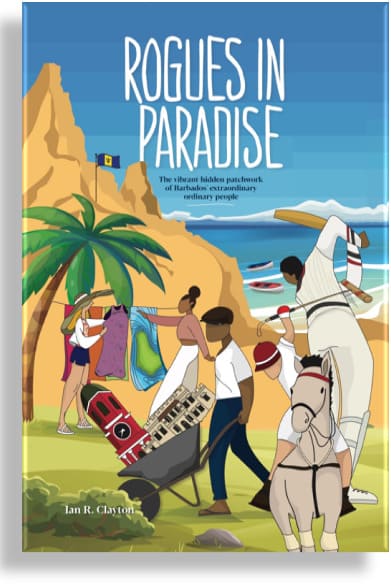
Ian R. Clayton is a Trinidad-born author and creator of RoguesCulture, a multimedia project exploring culture, identity, and belonging through storytelling and reflection. His debut creative nonfiction book, Rogues in Paradise, examines Barbadian culture through lived experience and narrative portraiture, situating local voices within wider conversations about colonial legacy, race relations, resistance, memory, and the evolving human condition.


RoguesCulture Manifesto
— Series Overview
-
- RoguesCulture Manifesto — Reflection over Retribution (Video 1)
The founding statement of the RoguesCulture philosophy — a call for clarity and conscience in a world driven by outrage. - How to Stay Human in a Modern World — A Practical Guide (Video 2)
Simple, mindful steps to stay grounded, compassionate, and clear-minded amid digital noise. - The RoguesCulture Manifesto Explained — Finding Clarity in the Chaos (Video 3)
A deep dive into the Humanity First philosophy and the meaning of reflective rebellion.
3A. Black Swans & RoguesCulture – The Unexpected Path to Reality (Vid 3A)
How spontaneous disruption is shaping the new frontier — in the language of Rogues and Black Swans.
3B. Chaos-is-a-Virtue- It is a first step in discovering truth and reality (Vid 3B)
Clarity rises from within chaos, rising past confusion to true insight - Five Social Commentary Trends Eroding Our Culture (Video 4)
A clear look at the forces that distort our culture, fuel division, and shape how we see ourselves in the modern world. -
Cultural Identity — Final Chapter of the RoguesCulture Manifesto (Video 5)
Where clarity turns inward. A reflection on who we are, what shapes us, and why identity becomes the anchor for staying authentic in a noisy world. -
Manifesto Deep Dive — Summary & Purpose (video 6)
Why the RoguesCulture Manifesto Mattersb This episode explores the philosophical foundation beneath the RoguesCulture series.
It reflects on cultural identity, history, belonging, bias, discrimination, and the ethical questions of reflection.responsibility, and restitution.The Manifesto is not a set of instructions, but a framework for thinking—an invitation to pause,question inherited narratives, and examine how history continues to shape identity in the present.
This Deep Dive closes one chapter of the series and opens the next.
—>The following series turns its focus to Identity, beginning here:
starting at https://roguesinparadise.com/spoils-of-identity-in-the-face-of-colonialism
- RoguesCulture Manifesto — Reflection over Retribution (Video 1)
Inspired by Rogues in Paradise
RoguesCulture grows from the roots of Rogues in Paradise, continuing its mission to celebrate humanity in all its contradictions — to explore truth with heart, and to choose reflection over retribution.
🌴 Be part of the story!
Download a free sample chapter of Rogues in Paradise and get your exclusive invitation to the book launch.

📘 Download your free chapter and receive an exclusive invitation to the launch event.
Follow Us — and Join the Journey
🌐 Dive deeper: read more in our
RoguesCulture Blogs
🎙️ Join the conversation: watch and subscribe on our
YouTube Podcast