(Part of the RoguesCulture podcast series)
How African Identity Shaped Caribbean Culture and Caribbean Identity
African identity lies at the root of Caribbean character in Barbados and across the West Indies. Yet Africa itself is not one story. It is a vast continent of more than 3,000 ethnic groups speaking over 2,000 languages, shaped by deserts, forests, savannahs, and coasts. To speak of “African identity” is to speak of thousands of threads woven together — some fierce, some quiet, all enduring. The Caribbean’s African cultural inheritance can also be seen in Barbados’s role as Britain’s laboratory for slavery, where plantation society first took shape.
Africa Is Not One Story
From the Sahel to the Cape, Africa contains multitudes. Languages, rituals, dress, and landscapes vary widely, and so do the ways communities define themselves. African cultural heritage encompasses vast differences among many cultures, including Maasai, Tuareg, Zulu, and West African traditions that shaped Caribbean identity. To understand what was carried across the Atlantic, we must first remember the diversity of what was left behind.
The Fierce and the Fearless
Some of Africa’s most visible identities are those shaped by resistance and defiance. The Zulu of Southern Africa forged powerful kingdoms that confronted colonial expansion with discipline and pride. The Maasai of East Africa, pastoralists draped in red, remain guardians of land and tradition. In the Sahara, the Berbers and Tuareg — often called the “Blue Men” for the indigo dye of their robes — mastered desert life and the great trade routes that crossed it.
These cultures embodied strength, pride, and endurance. Their legacy reminds us that African identity is not only a story of captivity and loss, but also one of power and resilience. Despite Colonial enslavement and oppression, African Identity survived and thrived.
The Everyday Cultures That Crossed the Atlantic
The people most often carried to the Caribbean were not usually warrior states but farmers, artisans, and traders. From the Igbo, Efik, and Ibibio of the Bight of Biafra; the Akan of the Gold Coast; the Yoruba, Ewe, and Fon of the Bight of Benin; and the Kongo of Central Africa came agrarian knowledge, herbal medicine, ironworking skills, and complex systems of kinship and belief. See the example of African skills that built Barbados.
Torn from their lands and shipped like cargo on perilous Atlantic voyages documented in the slave trade records, they carried seeds of memory: crops that would flourish in Caribbean soil, rhythms that would echo in drums and chants, and proverbs that would survive in creole languages.
People and Traditions Carried to the New World
The names often appear as lists in historical records, Igbo, Akan, Kongo, etc, each represents a distinct world of culture, belief, and social organisation. They were shipped to Barbados and then to the Caribbean and the Americas during the slave trade. What arrived in the Caribbean was not a single culture, but many — broken apart, yet resilient enough to find one another again.
The Igbo of the Bight of Biafra were largely agrarian, organised in decentralised communities that valued independence, kinship, and consensus. Their traditions of storytelling, proverbs, and spiritual belief carried strongly into Caribbean life, particularly in language and social structure.
The Igbo carried a quiet insistence on dignity — a belief that identity begins within and cannot easily be erased.
The Akan of the Gold Coast were part of structured kingdoms with systems of governance, gold trade, and rich artistic traditions. Their influence can be seen in naming systems, symbolism, and cultural hierarchies that survived in the Caribbean.
The Akan carried a sense of structure and symbolism — a cultural language of meaning that endured even when its outward forms were stripped away.
The Yoruba, from the Bight of Benin, brought complex spiritual systems centred on deities, ritual, and cosmology. Elements of these beliefs would later reappear across the Caribbean in religious practices, music, and ceremonial life.
The Yoruba carried a universe of spirit — a worldview in which the visible and invisible remained deeply connected.
From Central Africa, the Kongo peoples contributed knowledge of agriculture, healing practices, and deeply rooted spiritual traditions that emphasised the connection between the living and the ancestral world.
The Kongo carried the presence of ancestors — a living sense that the past walks alongside the present.
Not Passive Carriers of Culture
These were people with systems, identities, and knowledge — all of which crossed the Atlantic in fragments, survived under pressure, and reassembled into new forms in the Caribbean. They were people with systems, identities, and knowledge — all of which crossed the Atlantic in fragments, survived under pressure, and reassembled into new forms in the Caribbean. Together, these traditions did not vanish in the Caribbean. They adapted, intertwined, and quietly rebuilt themselves — not as fragments of the past, but as foundations of something new.
African Identity: A Rogue Spirit Across Continents
What unites these identities — warrior, trader, farmer, nomad — is a spirit of survival and reinvention.
Whether in Zulu defiance, Maasai ritual, Tuareg endurance, or the quiet resilience of Igbo farmers turned cane cutters, this spirit crossed oceans. The rogue is not simply a rebel. He is a survivor, a wanderer, a trickster who adapts to circumstance.
Africa’s rogue legacies became part of the creative energy that shaped Caribbean societies.
As the world struggles with growing alienation and the rapid rise of artificial intelligence, many fear that technology may weaken cultural memory and identity. Africa reminds us that ancestry is not easily erased.
Echoes in the Caribbean
The echoes of African identity remain everywhere in the Caribbean, woven quietly into the fabric of everyday life. They can be heard in the call-and-response of songs and work chants, in the layered rhythms of drums, and in the improvisational style of Caribbean music that invites participation rather than performance. The structure of these musical traditions—voices answering voices, rhythm guiding movement—reflects communal practices carried across the Atlantic centuries ago.
They live in the kitchen as well. The spice of pepper sauces, the slow cooking of stews, the use of okra, yams, and ground provisions all trace culinary paths back to West and Central Africa. Food is more than sustenance; it is memory preserved in taste and technique, passed from one generation to the next without the need for written instruction.
African echoes also appear in masquerades and festivals. Carnival traditions, masquerade bands, and street celebrations preserve elements of African performance culture—dance, costume, satire, and storytelling. Even humour carries these echoes: a playful wit that often masks social critique, a cultural style where laughter and resilience stand side by side.
Spiritual life reveals deeper continuities. Religious traditions such as Revival Zion, the Spiritual Baptists, and other syncretic practices blend Christian worship with African cosmologies of spirit, healing, and community. Drumming, chanting, and ecstatic movement link worshippers to spiritual traditions that long predate colonial churches.
Barbados African Identity
In Barbados, these African legacies appear in speech and rhythm—in proverbs, dialect, and storytelling. They appear in the quick humour of rum shops, in the respect for elders, and in the strong networks of family and community that helped people survive the plantation system.
In this tiny Caribbean island, echoes of Africa also appear in traditions such as the Landship movement and tuk bands, where drum rhythms and ceremonial performance reflect cultural patterns that travelled across the Atlantic with enslaved peoples. None of these traditions survived unchanged. Slavery, colonial rule, and migration reshaped them. Yet they endured by adapting, blending with European and Indigenous influences to create something new: a Caribbean culture that is neither purely African nor European but distinctly its own.
Africa, in this sense, was never lost. It became part of the cultural DNA of the Caribbean, alive in rhythm, language, ritual, and the everyday resilience of people who turned hardship into creativity.
Reflection
African identity is not a single story but a mosaic: warriors and wanderers, farmers and healers, traders and dreamers.
These identities did not vanish in the Middle Passage. They resurfaced in the Caribbean — reshaped by history, yet unmistakably alive.
Barbados is one such echo: a place where African roots intertwined with colonial rule, land, and memory to form something new.
This article forms part of the RoguesCulture podcast series. In the podcast, these African legacies come alive through rhythm, story, and voice — the sounds of identity carried across the Atlantic.

African cultural traditions carried across the Atlantic helped shape Caribbean identity.
Summary
African identity played a central role in shaping Caribbean culture. Enslaved Africans carried languages, spiritual traditions, music, agricultural knowledge, and social structures across the Atlantic, which blended with European influences to form new Caribbean societies. Barbados provides a powerful example of how African cultural roots continue to shape identity today.
The future may be digital, but identity remains human.
Video Of African Identity in the Caribbean
Frequently Asked Questions
How did African culture influence the Caribbean?
African culture shaped Caribbean music, religion, language, and food traditions. Enslaved Africans carried rhythms, agricultural knowledge, spiritual beliefs, and communal social structures across the Atlantic, where they blended with European and Indigenous influences to create new Caribbean cultures.
Which African groups influenced Caribbean culture?
Many African societies contributed to Caribbean identity, including the Igbo, Akan, Yoruba, Ewe, Fon, Efik, Ibibio, and Kongo peoples who were transported through the Atlantic slave trade.
Why does African identity remain strong in the Caribbean?
African cultural traditions survived through music, religion, language, family networks, and oral storytelling, allowing communities to preserve identity despite slavery and colonial rule.
RoguesCulture Identity Series
Explore the RoguesCulture Identity Series — a journey from the roots of identity to its future in an age of AI.
Identity Is Not Inherited. It Is Lived. | The Full Story
PART I — ROOTS
Where identity comes from
- The Spoils of Identity in the Face of Colonialism
Colonial systems reshaped identity through power, law, and economics, with Barbados as an early case study of cultural disruption and resilience. - Barbados: Identity in Motion
Identity evolves through migration, culture, and adaptation. Barbados offers a living example of identity shaped by history and community.. - Identity Across Cultures: The World Order
Expands the conversation globally, exploring how language, geography, religion, and history shape identity across societies. - Africa: Origins and Echoes of Identity
Explores the diverse African cultures that shaped Caribbean identity—from warrior societies and desert traders to farmers, artisans, and storytellers.PART II — MEANING
What identity actually is
- Cosmic Identity
A philosophical reflection on identity beyond nationality—considering humanity’s shared cultural and existential connections. - Identity: AI vs Ancestry in 2026
As artificial intelligence reshapes communication and creativity, this essay asks what remains uniquely human—and how ancestry helps keep identity grounded.
>>>>(END OF START 1-6)PART III — THE FUTURE
What happens to identity next
- Identity and the Future
Explores how identity may evolve as societies adapt to rapid technological, cultural, and economic change. - Who Needs Identity Anyway?
Questions whether identity still matters in a globalised world—and why belonging and cultural continuity remain important. - Identity Is Fragile
Reflects on how identity can be distorted, politicised, or manipulated—and why cultural awareness is essential to protect it. - AI, Quantum Computing, and Power
Examines how emerging technologies may reshape global power structures—and the future of human identity itself.
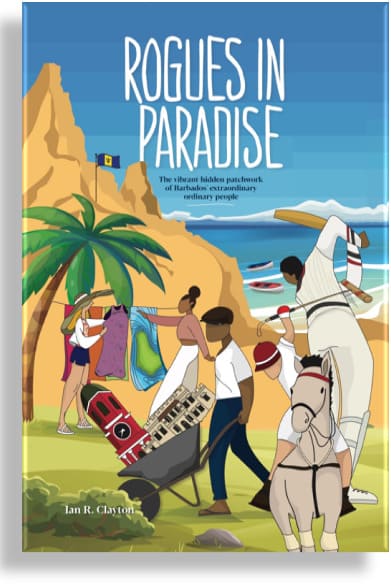
Based on Rogues in Paradise — pre-screening chapters available
Related Blogs
Rogues Re-Framed: https://roguesinparadise.com/britains-first-slave-society-the-barbados-prototype/
Barbados: Britain’s Laboratory for Slavery: https://roguesinparadise.com/barbados-britains-laboratory-for-slavery/