Synopsis
The RoguesCulture Identity Series is a multi-part collection of essays that explores how personal and collective identity are forged through action and experience rather than just biology. Drawing inspiration from the book Rogues in Paradise, the sources examine the historical impact of colonialism, migration, and Africa’s deep cultural legacy on Caribbean society. The narrative moves from these historical foundations to a philosophical analysis of meaning, questioning how humanity maintains its uniqueness in a world increasingly dominated by artificial intelligence. By connecting the past to the future, the series illustrates how ancestry and technology intersect to reshape our understanding of ourselves. Ultimately, the RoguesCulture Identity Series explores how human beings preserve meaning, memory, and identity while adapting to changing systems of power — from empire to artificial intelligence.
This work explores a broader question: identity is lived, not inherited.
Listen to the Podcast
See the animated version with script >>>>
It asks a simple but urgent question:
How can humans engage with artificial intelligence without losing identity, culture, and meaning?
We often think of identity as something we inherit — from ancestry, history, or place. It is presented as fixed, rooted, and defined by the past. But identity is not only inherited. It is lived.
It is shaped through daily experience — in the work people do, the beliefs they hold, the ways they express themselves, and the choices they make. It evolves over time, adapting to pressure, circumstance, and opportunity.
Why This Series Exists
For most of history, identity was shaped in the open—through culture, place, and shared experience.
Today, it is still all of those things.
But it is also something else.
It moves across borders.
It exists in digital spaces.
And increasingly, it is shaped by systems that observe, interpret, and respond to us.
This series follows that shift—from identity as inheritance,
to identity as practice,
to identity as something increasingly influenced by the technologies we build.
The Identity: Lived, Not Inherited Series
This is not a single idea, but a connected exploration:
- Foundations — memory, history, and belonging
- Expansion — diaspora, culture, and global identity
- Transformation — identity in the age of artificial intelligence
👉 Start from the beginning
👉 Or explore the latest: Part 11 – When AI Becomes the Interface
Barbados: Identity Under Pressure
Barbados offers a powerful case study of this process.
Barbados was Britain’s first fully developed slave society — a place where plantation capitalism and racial hierarchy were refined before spreading across the Atlantic world.
Under these conditions, identity was not freely expressed. It was controlled, restricted, and often denied.
Yet even within this system, people created meaning.
They developed cultural practices, humour, belief systems, and social structures that allowed them to retain dignity and community. These were not simply cultural traits — they were survival strategies.
Over time, these strategies became the foundation of a distinct Barbadian identity.
Identity as Practice
Identity is not static. It is something people do.
In Barbados, identity can be seen across multiple dimensions of life:
- Work, where labour becomes pride and belonging
- Faith, where belief becomes choice and direction
- Sport, where individual excellence represents collective identity
- Creativity, where culture is expressed, adapted, and shared
These are not separate categories. Together, they form a lived identity — one that is constantly shaped and reshaped.
From Survival to Expression
What began as survival under constraint evolved into cultural expression.
Humour became a way to reclaim dignity.
Music became a form of memory.
Community became a source of strength.
These elements were not passive. They were active responses to a system designed to reduce identity to labour.
Barbados demonstrates that identity does not disappear under pressure — it adapts.
Identity in a Changing World
Today, identity faces a different kind of pressure.
Artificial intelligence can now generate language, mimic voices, and reproduce cultural styles. It can simulate aspects of identity with increasing accuracy.
This raises a fundamental question:
If identity can be replicated, what remains uniquely human?
What Cannot Be Simulated?
Despite technological advances, certain elements of identity remain grounded in lived experience:
- Memory shaped by real events
- Relationships formed over time
- Cultural understanding passed through generations
- Personal choice and moral responsibility
These cannot be fully replicated by systems that operate without lived experience.
A New Layer: Identity and AI
As artificial intelligence becomes more embedded in everyday life, identity is no longer shaped only by what we express and experience.
It is also shaped by what is inferred, predicted, and presented back to us.
We do not search—we ask.
We do not browse—we receive.
And, more often than we realise, we do not choose—we delegate.
So where does identity live now?
Not only in what we express—
but in what is shaped around us.
Conclusion: Identity as Continuity
Identity begins in inheritance, but it is not confined to it.
It is shaped through action, sustained through culture, and extended through imagination.
Barbados shows that identity can endure even under extreme pressure — and can evolve into something stronger, more adaptive, and more expressive.
In an age of rapid technological change, this insight becomes increasingly important.
Identity is not simply what we are given.
It is what we live.
Continue the Series
👉 Explore all Identity Series articles
👉 Read the latest: When AI Becomes the Interface
👉 Watch: The Identity Series
Short Summary Video -The Identity Series on who we are
RoguesCulture Identity Series
A journey from the roots of identity to its future in an age of AI.
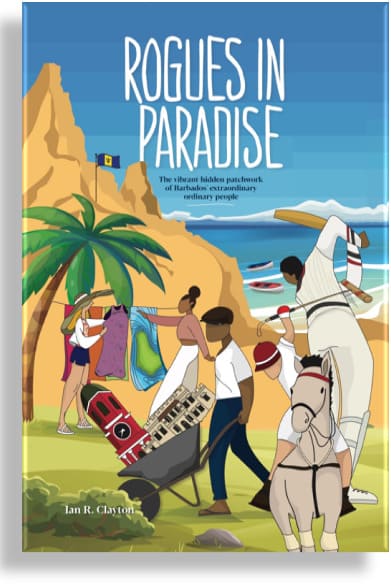
Inspired by the Book Rogues in Paradise
In Empire’s Shadow: Britain’s Laboratory for Slavery and the Island That Transcended
Dive deeper into Rogues In Paradise —
Voices, Empire, and Beyond Paradise
Explore the Book Behind the Series →
Discover the philosophical bridge between identity, empire, and modern systems
—or Go straight to the story
Identity In The Age of AI
Identity Is Not Inherited. It Is Lived. | The Full Story
PART I — ROOTS
Where identity comes from
- The Spoils of Identity in the Face of Colonialism
Colonial systems reshaped identity through power, law, and economics, with Barbados as an early case study of cultural disruption and resilience. - Barbados: Identity in Motion
Identity evolves through migration, culture, and adaptation. Barbados offers a living example of identity shaped by history and community.. - Identity Across Cultures: The World Order
Expands the conversation globally, exploring how language, geography, religion, and history shape identity across societies. - Africa: Origins and Echoes of Identity
Explores the diverse African cultures that shaped Caribbean identity—from warrior societies and desert traders to farmers, artisans, and storytellers.
-4a. African Echoes
Explores the influence of African heritage on Barbados and Caribbean identity: Featuring culture, memory, music, spirituality, and everyday life across the RoguesCulture series.
PART II — MEANING
What identity actually is
- Cosmic Identity
A philosophical reflection on identity beyond nationality—considering humanity’s shared cultural and existential connections. - Identity: AI vs Ancestry in 2026
As artificial intelligence reshapes communication and creativity, this essay asks what remains uniquely human,
and how ancestry helps keep identity grounded. - Identity and the Future
Explores how identity may evolve as societies adapt to rapid technological, cultural, and economic change.
>>>>(END OF START 1-7)
INTERLUDE – In EMPIRE’S SHADOW
How systems persist
Empires do not disappear when colonial rule ends.
The system of power continues to shape identity, culture, and society today.
PART III — SYSTEMS & FRAGILITY
What happens to identity next
- Identity Is Fragile
Reflects on how identity can be distorted, politicised, or manipulated—and why cultural awareness is essential to protect it. - Who Needs Identity Anyway?
Questions whether identity still matters in a globalised world—and why belonging and cultural continuity remain important.
NEW SERIES
Living with AI explores how intelligent agents are reshaping work, creativity, and decision-making
—and how humans can thrive alongside them.
BUILDING WITH AI
Building with AI explores how individuals, creators, entrepreneurs, and businesses can design, evaluate, and work intelligently with AI agents. The series focuses on practical applications, real-world examples, and emerging opportunities while emphasising the importance of human creativity, judgment, ethics, and authenticity.
Coming soon.
Based on The Book: ‘Rogues in Paradise’
Unlikely voices, rogues and legends, rising from Britain’s blueprint for slavery to a republic beyond the Empire’s shadow
Explore the ideas behind the book —or
Go straight to the story.
Related Blogs
Rogues Re-Framed: https://roguesinparadise.com/britains-first-slave-society-the-barbados-prototype/
Barbados: Britain’s Laboratory for Slavery: https://roguesinparadise.com/barbados-britains-laboratory-for-slavery/