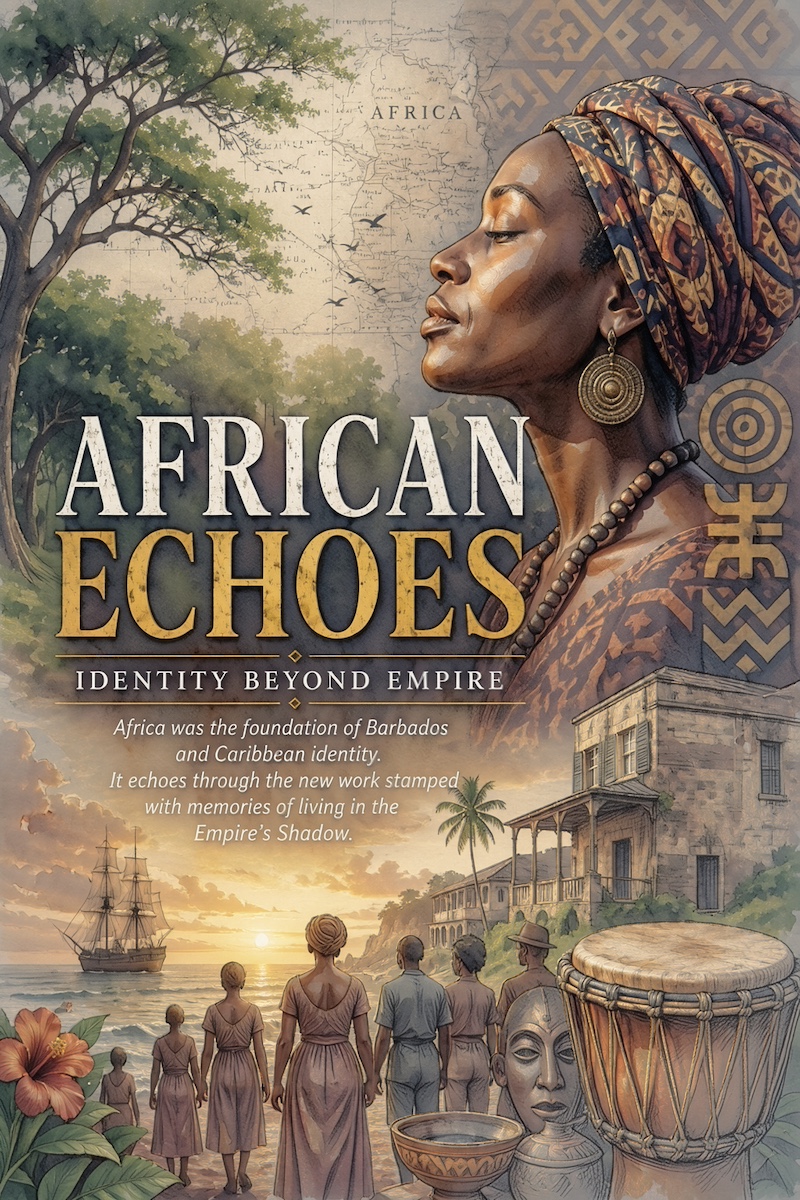
Africa Was The Foundation of Barbados and Caribbean identity. African Echoes with Lived Caribbean Identity and memories of living in the Empire’s Shadow
How identity survived systems designed to erase it
(Part of the RoguesCulture Identity Series — ROOTS)
The story of African identity in the Caribbean is not simply a story of survival.
It is a story of reconstruction.
Too often, slavery is described only through the violence of capture, transportation, and plantation labour. But the enslaved did not arrive in Barbados and the Caribbean as blank slates waiting to be shaped by empire. They arrived carrying memory, belief systems, skills, social structures, spiritual traditions, and ways of understanding the world that the Atlantic could not fully erase.
What crossed the ocean was not merely labour.
It was culture.
It was social architecture.
And despite the brutality of slavery, much of that architecture survived.
The Attempt to Erase Identity
When Barbados introduced the 1661 Slave Code, it helped create one of the most aggressive legal systems of racial control in the Atlantic world. Human beings were reduced to property. African identity was intentionally stripped of legal recognition. The law attempted to transform people into “goods and chattels” — objects existing only for labour and economic extraction.
But legal classification and lived reality were never the same thing.
The plantation system tried to impose a new identity from above. Yet beneath that system, African identities continued to exist through memory, ritual, kinship, storytelling, resistance, and adaptation.
The enslaved understood themselves as more than property, even when the law denied their humanity.
That distinction matters.
Because identity is never fully created by systems alone.
It is also lived internally through culture, belief, and shared experience.
Related Links – African-Bajan Identity
The African Foundations That Endured
The Caribbean inherited far more from Africa than labour.
Warrior traditions survived in organised resistance movements such as Bussa’s Rebellion in Barbados and the Haitian Revolution. These uprisings were not random explosions of anger; they reflected retained forms of leadership, coordination, symbolism, and collective memory.
Storytelling traditions survived through oral culture, humour, folklore, and eventually political activism. Figures such as Olaudah Equiano used narrative itself as a form of resistance, challenging the moral foundations of slavery before audiences in Britain and beyond.
Spiritual traditions also endured. Across the Caribbean, African religious systems blended, adapted, and re-emerged in new forms despite colonial suppression. Hidden rituals, coded practices, and communal ceremonies preserved meaning beneath the surface of plantation life.
Economic culture survived as well. Enslaved Africans created internal markets, systems of exchange, and informal economies that allowed families and communities to maintain dignity within oppressive systems. Women often became central figures in this process, sustaining networks of survival that extended far beyond plantation labour itself.
The Atlantic slave system attempted erasure.
But the enslaved continually rebuilt identity underneath it.
Lived Identity vs Legal Identity
One of the great tensions of Caribbean history lies between legal identity and lived identity.
Colonial law defined Africans as property.
Lived reality continually refuted that definition.
The brutality of the plantation system was itself evidence of this contradiction. Violence was necessary precisely because human identity could not be fully reduced to legal categories. Resistance, rebellion, cultural retention, humour, spirituality, and community constantly challenged the fiction that people could become mere objects.
The African presence in the Caribbean became a lived rejection of the system itself.
This tension did not disappear after emancipation.
The Shadow of Colonial Systems
Many colonial structures survived long after the formal empire faded.
Legal systems, land ownership patterns, educational models, tourism economies, and social hierarchies often continued to reflect colonial priorities. In many Caribbean societies, political independence did not fully dismantle the deeper architecture of inequality established during slavery and empire.
The legacy of those systems still appears today:
- in wealth concentration,
- migration patterns,
- land ownership,
- labour structures,
- and ongoing debates about reparations and belonging.
The shadow of empire remains visible not only in institutions but also in how societies define status, opportunity, and legitimacy.
Yet Caribbean identity has never been shaped only by oppression.
It has also been shaped by reinvention.
The Caribbean as Reconstruction
What emerged in Barbados and across the Caribbean was not simply an extension of Africa, nor merely a product of Europe.
It became something new.
African traditions, mixed with colonial realities, migration, religion, language, resistance, and survival, produced entirely new forms of identity. Music, cuisine, humour, spirituality, family structures, storytelling, and social life all became part of this reconstruction.
The Caribbean did not passively inherit identity.
It actively recreated it.
That process continues today.
Why African Echoes Still Matters
In the modern world, systems continue shaping identity in new ways.
Algorithms classify people.
Digital platforms mediate communication.
Artificial intelligence increasingly filters information and influences decision-making.
The technologies are different.
But the underlying question remains familiar:
How do human beings preserve meaning inside systems larger than themselves?
The history of African identity in the Caribbean offers one answer.
People adapt.
People reinterpret.
People rebuild meaning even under immense pressure.
Identity survives not because systems permit it —
but because human beings continually recreate it through lived experience.
That may be one of the Caribbean’s greatest lessons to the modern world.
Summary Video African Echoes
RoguesCulture Identity Series
A journey from the roots of identity to its future in an age of AI.
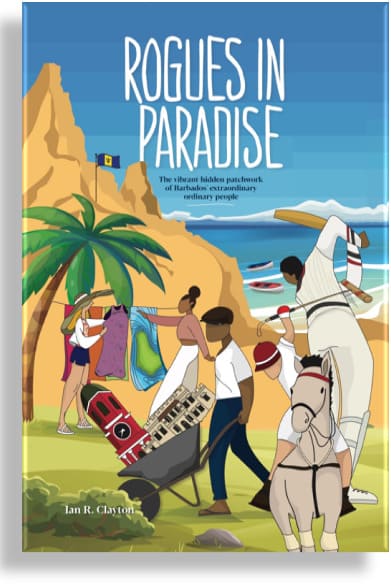
Inspired by the Book Rogues in Paradise
In Empire’s Shadow: Britain’s Laboratory for Slavery and the Island That Transcended
Dive deeper into Rogues In Paradise —
Voices, Empire, and Beyond Paradise
Explore the Book Behind the Series →
Discover the philosophical bridge between identity, empire, and modern systems
—or Go straight to the story
Identity In The Age of AI
Identity Is Not Inherited. It Is Lived. | The Full Story
PART I — ROOTS
Where identity comes from
- The Spoils of Identity in the Face of Colonialism
Colonial systems reshaped identity through power, law, and economics, with Barbados as an early case study of cultural disruption and resilience. - Barbados: Identity in Motion
Identity evolves through migration, culture, and adaptation. Barbados offers a living example of identity shaped by history and community.. - Identity Across Cultures: The World Order
Expands the conversation globally, exploring how language, geography, religion, and history shape identity across societies. - Africa: Origins and Echoes of Identity
Explores the diverse African cultures that shaped Caribbean identity—from warrior societies and desert traders to farmers, artisans, and storytellers.
-4a. African Echoes
Explores the influence of African heritage on Barbados and Caribbean identity: Featuring culture, memory, music, spirituality, and everyday life across the RoguesCulture series.
PART II — MEANING
What identity actually is
- Cosmic Identity
A philosophical reflection on identity beyond nationality—considering humanity’s shared cultural and existential connections. - Identity: AI vs Ancestry in 2026
As artificial intelligence reshapes communication and creativity, this essay asks what remains uniquely human,
and how ancestry helps keep identity grounded. - Identity and the Future
Explores how identity may evolve as societies adapt to rapid technological, cultural, and economic change.
>>>>(END OF START 1-7)
INTERLUDE – In EMPIRE’S SHADOW
How systems persist
Empires do not disappear when colonial rule ends.
The system of power continues to shape identity, culture, and society today.
PART III — SYSTEMS & FRAGILITY
What happens to identity next
- Identity Is Fragile
Reflects on how identity can be distorted, politicised, or manipulated—and why cultural awareness is essential to protect it. - Who Needs Identity Anyway?
Questions whether identity still matters in a globalised world—and why belonging and cultural continuity remain important.
NEW SERIES
Living with AI explores how intelligent agents are reshaping work, creativity, and decision-making
—and how humans can thrive alongside them.
BUILDING WITH AI
Building with AI explores how individuals, creators, entrepreneurs, and businesses can design, evaluate, and work intelligently with AI agents. The series focuses on practical applications, real-world examples, and emerging opportunities while emphasising the importance of human creativity, judgment, ethics, and authenticity.
Coming soon.
Based on The Book: ‘Rogues in Paradise’
Unlikely voices, rogues and legends, rising from Britain’s blueprint for slavery to a republic beyond the Empire’s shadow
Explore the ideas behind the book —or
Go straight to the story.
Related Blogs
Rogues Re-Framed: https://roguesinparadise.com/britains-first-slave-society-the-barbados-prototype/
Barbados: Britain’s Laboratory for Slavery: https://roguesinparadise.com/barbados-britains-laboratory-for-slavery/