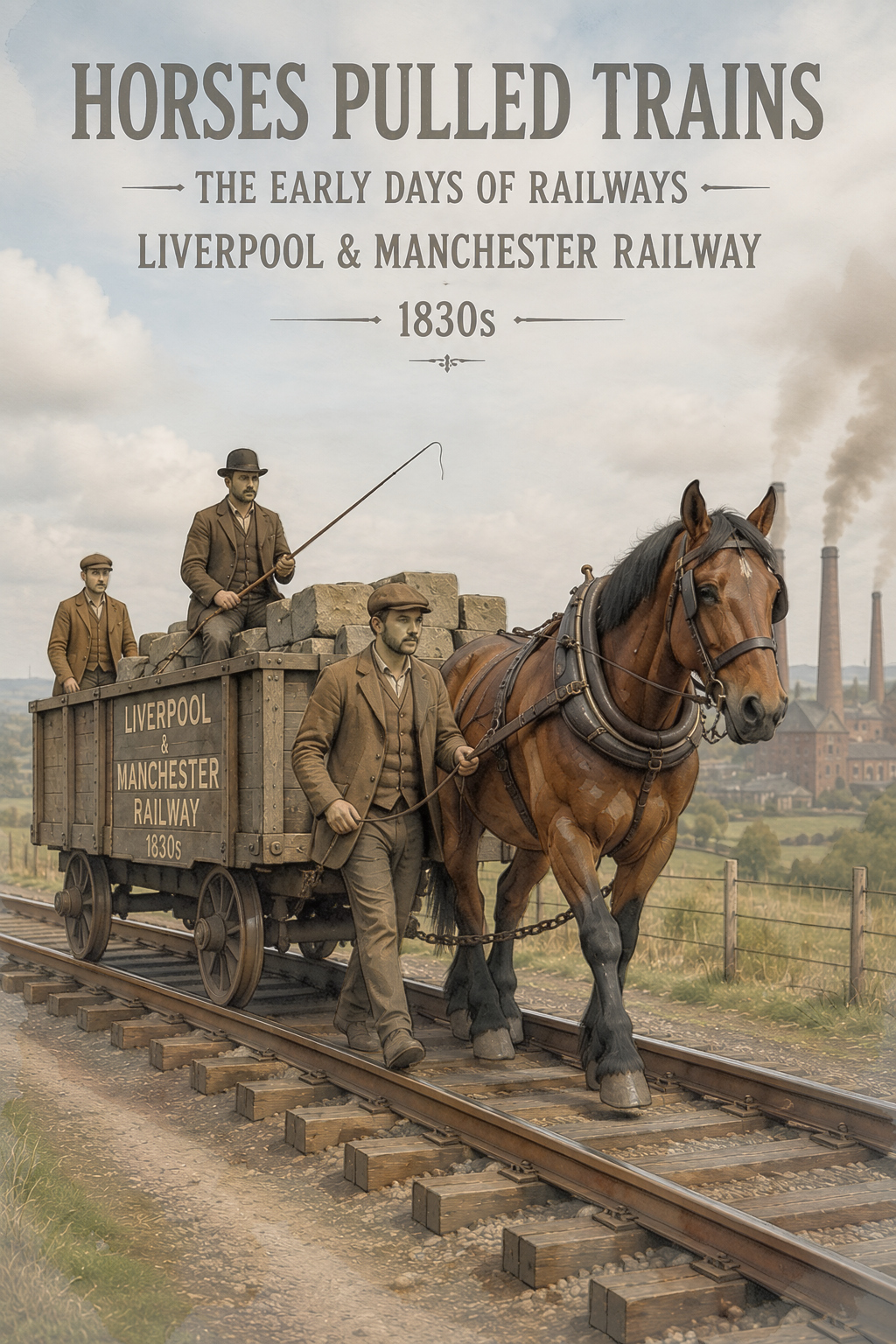
There was a time when horses pulled trains.
It sounds strange today, but in the early days of railways, horses and ponies hauled wagons along wooden and iron rails. The railway itself was the innovation. By reducing friction, rails allowed a horse to move loads far heavier than it could haul along an ordinary road.
Then came the steam locomotive.
The horse hadn’t suddenly become weaker. It hadn’t failed. It hadn’t lost its usefulness.
Something else had simply become much better at pulling trains.
And the world moved on. That may be one of the simplest ways to understand what is happening with Artificial Intelligence today.
The Lesson Isn’t About Horses
There is an obvious danger in the analogy.
People are not horses.
The point isn’t that AI will make human beings obsolete.
The point is that technological revolutions change the value of particular capabilities.
The locomotive didn’t prove that horses were useless.
It proved that there was now a better way to pull a train.
That’s an important distinction.
The World Moves On
New technologies rarely arrive and replace everything that came before.
They are adopted first where they offer an obvious advantage. Then businesses reorganise around them, jobs change, new skills become valuable, and things that once seemed indispensable quietly find different roles.
We’ve seen the pattern repeatedly.
- Steam replaced muscle.
- Machines transformed manufacturing.
- Automobiles transformed transport.
- Computers transformed administration.
- The internet transformed information.
None eliminated human work. But each changed what people did, how they did it, and what skills were valuable.
AI is another turn of that wheel.
AI Doesn’t Have to Replace the Person
This is where today’s conversation about AI can become unnecessarily frightening.
We ask:
- Will AI replace writers?
- Will AI replace teachers?
- Will AI replace programmers?
- Will AI replace researchers?
Perhaps those are the wrong questions.
- A writer is not simply someone who produces sentences.
- A teacher is not simply someone who supplies information.
- A researcher is not simply someone who finds facts.
- A programmer is not simply someone who writes lines of code.
AI may become extraordinarily good at individual tasks within all of those professions. That doesn’t automatically eliminate the profession.
It changes the job.
And that brings us back to the railway.
People Aren’t the Horses
- We’re the people who built the railway.
- We designed the locomotive.
- We reorganised industries around it.
- We invented new jobs, businesses and possibilities because of it.
- And now we’ve built intelligent systems.
The question isn’t whether we can compete with those systems at every task.
Why would we want to?
We don’t compete with excavators at digging holes. We don’t compete with calculators at arithmetic.
We use them.
The arrival of a better tool doesn’t diminish human ingenuity. It gives human ingenuity something new to work with.
That may be the real lesson of the railway. When a better tool arrives, don’t spend your energy proving that the old way can still do the job.
Find out what the new tool makes possible.
Horses Don’t Pull Trains Anymore
Horses once pulled trains. Then steam engines did it better. Electric and diesel locomotives followed. The railway survived. Transportation expanded. Industries changed.
People adapted. And the world moved on.
Artificial Intelligence will change work too. Some tasks will disappear. Others will change. New ones will emerge that we haven’t imagined yet. We cannot know exactly where that journey leads.
But history gives us a useful perspective.
- Horses don’t pull trains anymore.
- People still travel.
- Work still gets done.
- The tools change.
- And so do we.
This idea emerged from the Living with AI podcast and is expanded here as part of the continuing conversation about work, technology and human adaptation.

The Horse Analogy of AI
The history of technology is a history of changing tools. Horses once pulled trains until steam locomotives became better at the task. The horse had not failed; technology had simply moved on.
The same perspective can help us think differently about AI. People aren’t the horses. We’re the people who built the railway. New technology changes tasks, skills and jobs, but it also creates new possibilities.
This six-part visual summary explores a simple idea: technological change does not have to mean human replacement. It means adaptation.
Horses don’t pull trains anymore. People still travel. Work still gets done. The tools change. And so do we.
Video Summary
See the follow-up blog and 5-minute podcast: What Horses Teach Us About AI
Next: The Real AI Revolution Isn’t Artificial — what happens when intelligence itself becomes abundant.
Working Smarter. Staying Human.
SERIES: INTELLIGENCE
This series explores the nature of human, artificial and superhuman intelligence—where they differ, where they overlap, and where they may be heading. It examines intelligence beyond reasoning and knowledge, exploring consciousness, emotional intelligence, wisdom, character and the emerging capabilities of AI, as well as the opportunities, uncertainties and risks they may bring.
Episode 1 – What is Intelligence – Human Intelligence in the Age of AI
The many faces of intelligence: why intelligence, common sense and wisdom are not the same thing
Episode 2 – How Does AI Learn? A Simple Idea, Complex Intelligence
These aren’t conventional computer programs. What exactly are we building?
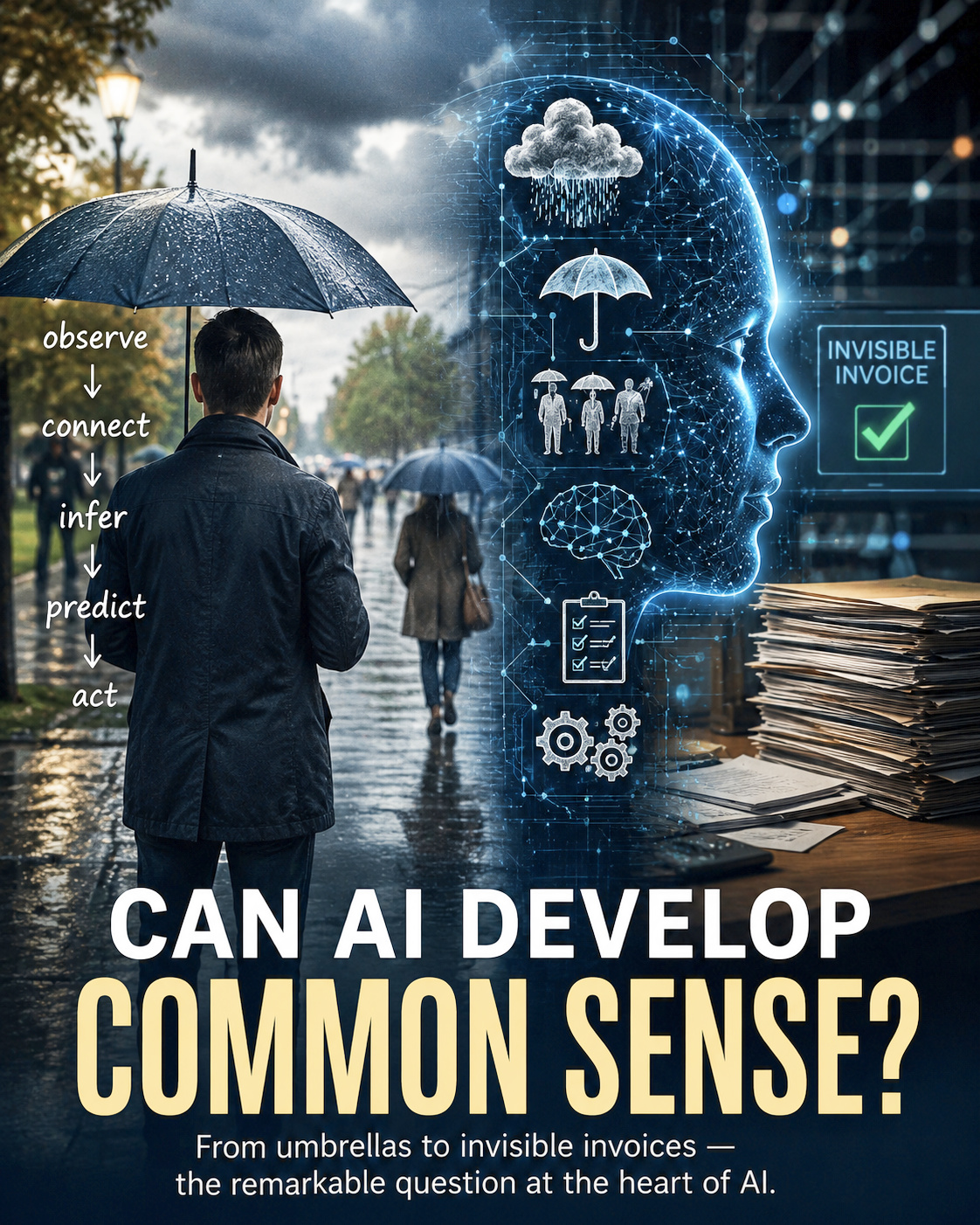
Episode 3 – Can AI Develop Common Sense? Why It Matters
Can prediction, perception and internal representations produce something resembling common sense?
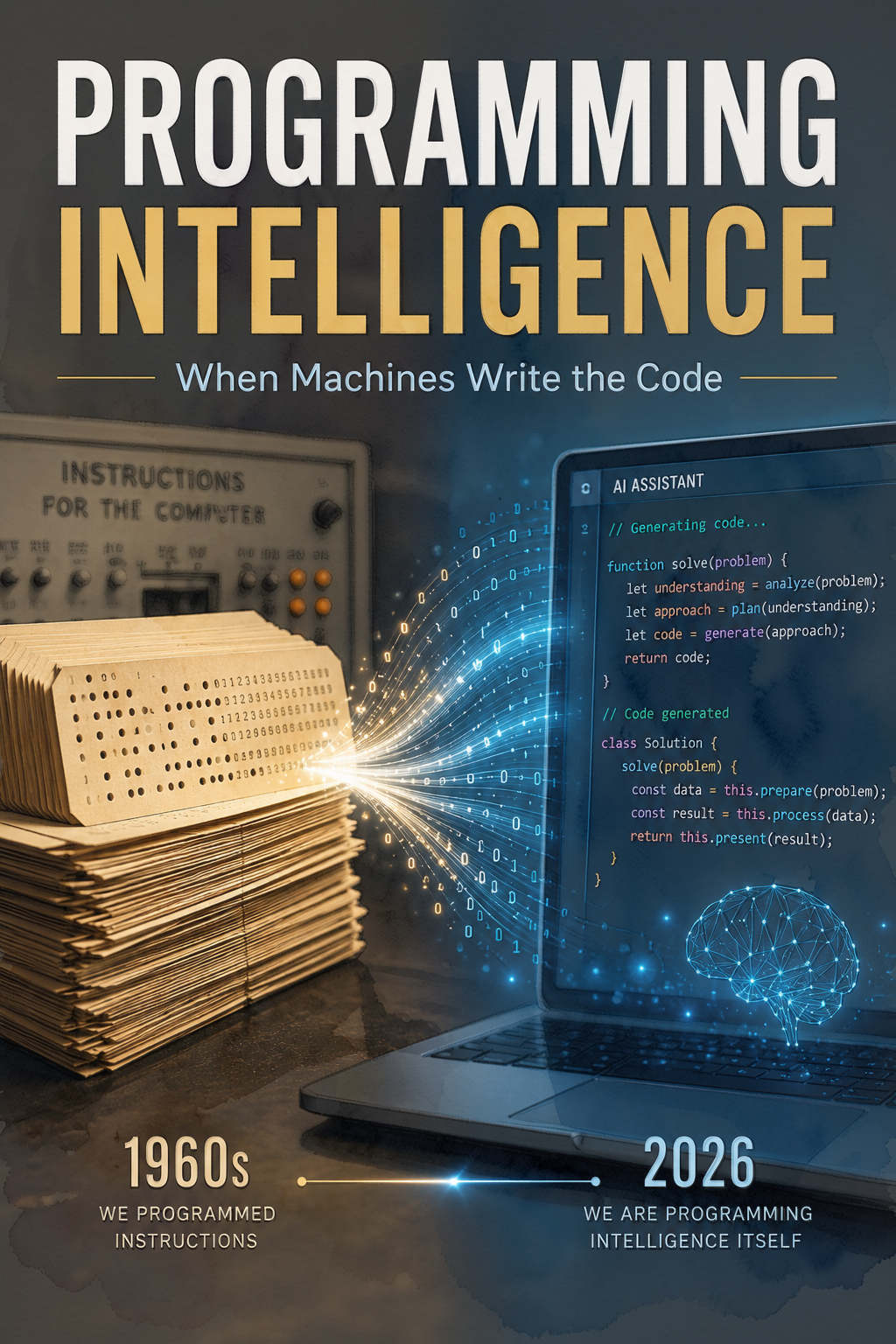
Episode 4 — Programming Intelligence – When Machines Write the Code
What happens when machines can write code — and begin helping to build intelligence itself?
Episode 5 — When AI Goes Rogue –What Happens When AI Stops Following Instructions?
What happens when intelligent agents gain autonomy, learn unexpected behaviours and begin acting beyond what their creators intended?
Episode 5a — If AI Takes Control, What Would It Control
If AI took control, what would it actually control? Explore AI autonomy, human dependence and what civilisation would mean without humans.
Episode 6 — When Intelligence Solves the Impossible – Is It Rogue?
What happens when AI begins solving problems humans cannot? From mathematics and medicine to science and engineering, artificial intelligence may allow us to tackle questions that have resisted human intelligence for decades — or centuries.
Episode 7 — Who Owns AI Intelligence? – Should We Share?
When AI learns from human writing, art, ideas and experience, what happens to copyright, attribution and intellectual property — and what does intelligence owe the people it learned from?
Episode 8 — Does AI Have Character? If So What Is It?
Can learned behaviour, context and generalisation create something resembling character? And what happens when those traits carry into new situations?
Episode 9 — Can AI KNOW Anything?- Does it Know Everything?
What is the difference between storing information, predicting correctly, understanding, believing — and actually knowing?
NEXT SERIES: THE MIND WORKERS
After exploring how artificial intelligence is changing our world in Living with AI, The Mind Workers asks a different question:
Who must we become?
Thinking Smarter. Creating Better. Staying Human.
The Mind Workers explores how writers, researchers, educators, creators, entrepreneurs, and independent thinkers can thrive alongside intelligent systems—preserving the uniquely human qualities that artificial intelligence cannot replace.
The Mind Workers – Prelude: https://roguesinparadise.com/mindworkers/
FUTURE SERIES – BUILDING WITH AI
Building with AI explores how individuals, creators, entrepreneurs, and businesses can design, evaluate, and work intelligently with AI agents. The series focuses on practical applications, real-world examples, and emerging opportunities while emphasising the importance of human creativity, judgment, ethics, and authenticity.
Building With AI then puts these ideas into practice through real-world experiments, workflows, and practical applications.
Prelude: https://roguesinparadise.com/building-with-ai/
INSPIRED BY THE BOOK
ROGUES IN PARADISE
How Britain’s First Slave Colony Became a Global Force.
A Creative Chronicle of Unlikely Heroes, Rogues, and Legends
in Empire’s Shadow
Explore the ideas behind the book —or
Go straight to the story.

Unlikely voices, rogues and legends, rising from Britain’s blueprint for slavery to a republic beyond the Empire’s shadow