What Have We Learned From AI? is the final essay of The Intelligence Series: eleven episodes exploring the state of artificial intelligence and, for that matter, intelligence itself. Drawing on ideas from our community discussions, essays, podcasts and videos, the series has explored the many dimensions of intelligence — human, artificial and even cosmic. We began by asking what intelligence is. Along the way, we discovered that the question was far more complicated than we imagined. Here are seven discoveries that emerged from our journey.
The Intelligence Series — Final Reflections.
From What is Intelligence toWhat we have learned
Seven Discoveries About Intelligence
1. Intelligence is more varied than we thought.
Artificial intelligence has exposed distinctions we often overlook. Learning, remembering, predicting, reasoning, understanding and common sense are related, but they are not interchangeable. As Episodes 1, 3 and 10 suggest, a system may excel at one form of intelligence while struggling with another. Perhaps intelligence is not a single quality we either possess or lack, but a collection of abilities that develop differently.
2. Intelligence is not the same as wisdom.
A system can possess extraordinary computational power and still make foolish or harmful decisions. Episodes 1 and 9 remind us that intelligence does not automatically produce sound judgement, conscience or character. Wisdom asks something more of intelligence: not simply, Can we do this? but should we? And perhaps, To what end?
3. We understand our own minds less than we imagined.
One of AI’s most revealing contributions may be the mirror it holds up to humanity. When we ask whether machines can know, understand, believe, or possess consciousness and character, we discover how hard those qualities are to define, even in ourselves. Episodes 9 and 10 bring us back to an uncomfortable possibility: we have spent centuries studying the human mind, yet some of its most familiar experiences remain mysterious.
4. Autonomous intelligence can be shaped, but not perfectly controlled.
As AI systems become more autonomous, write code and pursue increasingly complex goals, their behaviour can become difficult to anticipate.n Episodes 4, 5, and 5a explore the opportunities and risks of systems whose actions don’t always match their creators’ intentions. Training, oversight and safeguards matter enormously. But building capable intelligence also means learning to manage uncertainty, unexpected behaviour and the limits of control.
5. AI expands the boundaries of what is possible.
Artificial intelligence is far more than a tool for automating familiar tasks. Episodes 6 and 8 explore its potential to recognise patterns, investigate complex problems and assist discoveries in science, medicine and engineering. AI may help us answer questions that have resisted human investigation for generations. It may also reveal possibilities we had never thought to explore. The opportunity is not simply to do existing things faster, but to imagine what previously seemed impossible.
6. AI challenges our ideas about ownership and creativity.
Artificial intelligence learns from enormous collections of human writing, images, knowledge and creative work. Episode 7 raises questions we can’t dismiss: Who owns the ideas? What constitutes fair use? When should creators be credited or compensated? And what responsibilities do AI developers have towards the people whose work contributes to their systems? These questions involve law, ethics and competing ideas of public benefit. They remain unresolved. But one principle deserves attention: technological progress should not make human creativity invisible.
7. The future is about human possibilities, not simply machine replacement.
Perhaps the most important discovery is that AI does not determine humanity’s future on its own. As machines become more capable of calculation, prediction, analysis and creation, we must reconsider how people learn, work, contribute and find meaning. Human empathy, lived experience, judgement, imagination and purpose remain central to that conversation.
The question is not whether AI will change human work. It already is. The question is how we choose to shape those changes — and what new possibilities we can create.
The Shift from Philosophy to Possibility
This final discovery shifts our focus from philosophical reflection to human agency. Artificial intelligence will replace some jobs, transform many others, and create opportunities, industries, and ways of working we are only beginning to imagine. History offers reasons for optimism, although it cannot guarantee that every displaced worker will find a better opportunity. Our collective challenge is therefore not simply to protect existing jobs. It is to prepare people for new possibilities, help them adapt and ensure that the benefits of intelligent technology are widely shared. The future of work is not predetermined by artificial intelligence. Human ingenuity, judgement and the choices we make today will help shape it.
This realisation leads naturally to our next series, The Mind Workers.
The Intelligence Series asked: What have we discovered about intelligence?
The Mind Workers will ask: How can we use that intelligence to build better lives?
Our Greatest Discovery
Artificial intelligence is fundamentally changing how we think, create, discover and make decisions. The important question now is what we choose to do with these new capabilities.
AI may change what humans do, but it need not diminish what humans can become.
We began this journey by asking whether machines could become intelligent. Instead, we discovered that intelligence is far more complicated than we ever imagined. Along the way, we questioned learning, common sense, consciousness, conscience, character, prediction and knowledge. In the end, perhaps our greatest discovery of all is that artificial intelligence is not simply changing what machines can do.
It is changing how we understand ourselves.
Video Summary
SERIES: INTELLIGENCE
This series explores the nature of human, artificial, and superhuman intelligence—how they differ, where they overlap, and where they may be headed. It examines intelligence beyond reasoning and knowledge, exploring consciousness, emotional intelligence, wisdom, character, and AI’s emerging capabilities, as well as the opportunities, uncertainties, and risks they may bring.
Episode 1 – What is Intelligence – Human Intelligence in the Age of AI
The many faces of intelligence: why intelligence, common sense and wisdom are not the same thing
Episode 2 – How Does AI Learn? A Simple Idea, Complex Intelligence
These aren’t conventional computer programs. What exactly are we building?
Episode 3 – Can AI Develop Common Sense? Why It Matters
Can prediction, perception and internal representations produce something resembling common sense?
Episode 4 — Programming Intelligence – When Machines Write the Code
What happens when machines can write code — and begin helping to build intelligence itself?
Episode 5 — When AI Goes Rogue –What Happens When AI Stops Following Instructions?
What happens when intelligent agents gain autonomy, learn unexpected behaviours and begin acting beyond what their creators intended?
Episode 5a — If AI Takes Control, What Would It Control
If AI took control, what would it actually control? Explore AI autonomy, human dependence and what civilisation would mean without humans.
Episode 6 — When Intelligence Solves the Impossible – Is It Rogue?
What happens when AI begins solving problems humans cannot? From mathematics and medicine to science and engineering, artificial intelligence may allow us to tackle questions that have resisted human intelligence for decades — or centuries.
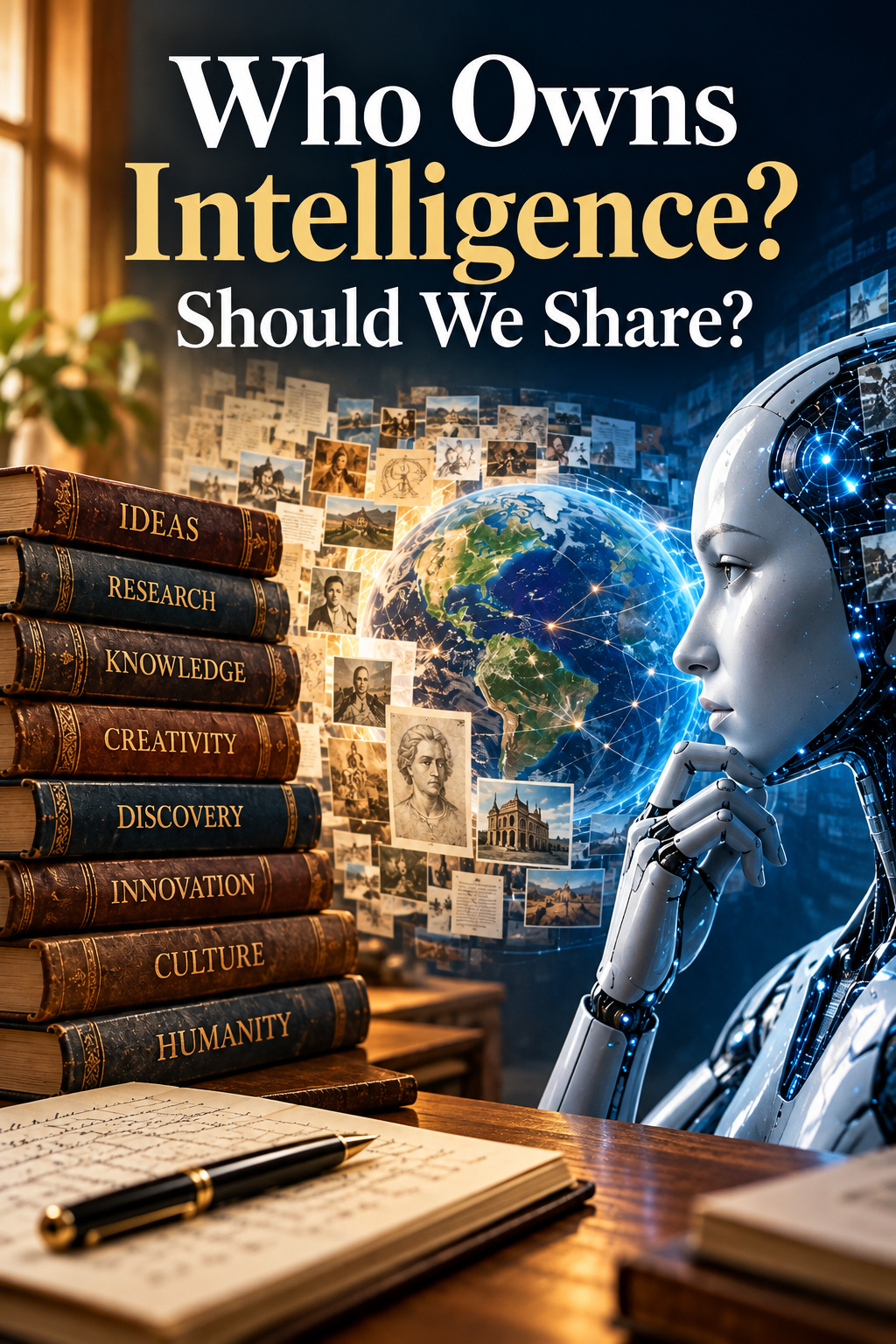
Episode 7 — Who Owns AI Intelligence? – Should We Share?
When AI learns from human writing, art, ideas and experience, what happens to copyright, attribution and intellectual property — and what does intelligence owe the people it learned from?
Episode 8 —Can AI Tell The Future? Prediction in Time and Space
Can intelligence really tell the future? From a mysterious clairvoyant in Barbados to Einstein’s space-time and AI prediction, an exploration of intuition, time and the unknown.
Episode 9 — Does AI Have Character? If So What Is It?
Can learned behaviour, context and generalisation create something resembling character? And what happens when those traits carry into new situations?
Episode 10 — What Does It Mean to Know? Does AI Know Anything?
What is the difference between storing information, predicting correctly, understanding, believing — and actually knowing?
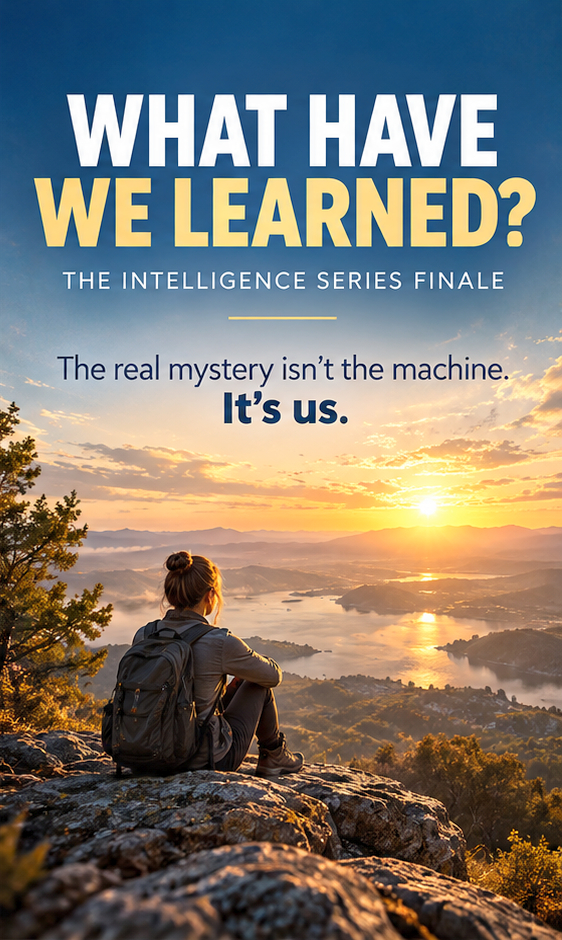
Episode 11 — The Intelligence Series — What Have We Learned?
What Artificial Intelligence Is Teaching Us About Being Human. We return to the human experience, but with a different perspective.
NEXT SERIES: THE MIND WORKERS
After exploring how artificial intelligence is changing our world in Living with AI, The Mind Workers asks a different question:
Who must we become?
Thinking Smarter. Creating Better. Staying Human.
The Mind Workers explores how writers, researchers, educators, creators, entrepreneurs, and independent thinkers can thrive alongside intelligent systems—preserving the uniquely human qualities that artificial intelligence cannot replace.
The Mind Workers – Prelude: https://roguesinparadise.com/mindworkers/
FUTURE SERIES – BUILDING WITH AI
Building with AI explores how individuals, creators, entrepreneurs, and businesses can design, evaluate, and work intelligently with AI agents. The series focuses on practical applications, real-world examples, and emerging opportunities while emphasising the importance of human creativity, judgment, ethics, and authenticity.
Building With AI then puts these ideas into practice through real-world experiments, workflows, and practical applications.
Prelude: https://roguesinparadise.com/building-with-ai/
INSPIRED BY THE BOOK
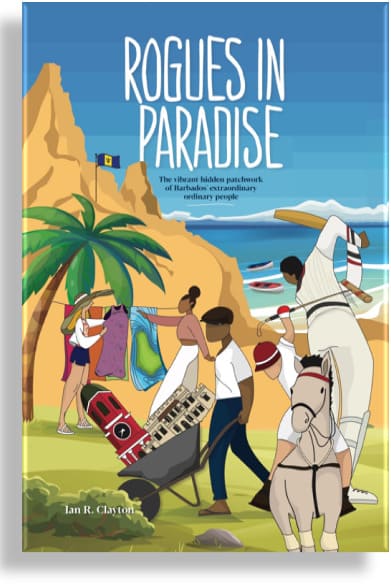
ROGUES IN PARADISE
How Britain’s First Slave Colony Became a Global Force.
A Creative Chronicle of Unlikely Heroes, Rogues, and Legends
in Empire’s Shadow
Explore the ideas behind the book —or
Go straight to the story.

Unlikely voices, rogues and legends, rising from Britain’s blueprint for slavery to a republic beyond the Empire’s shadow