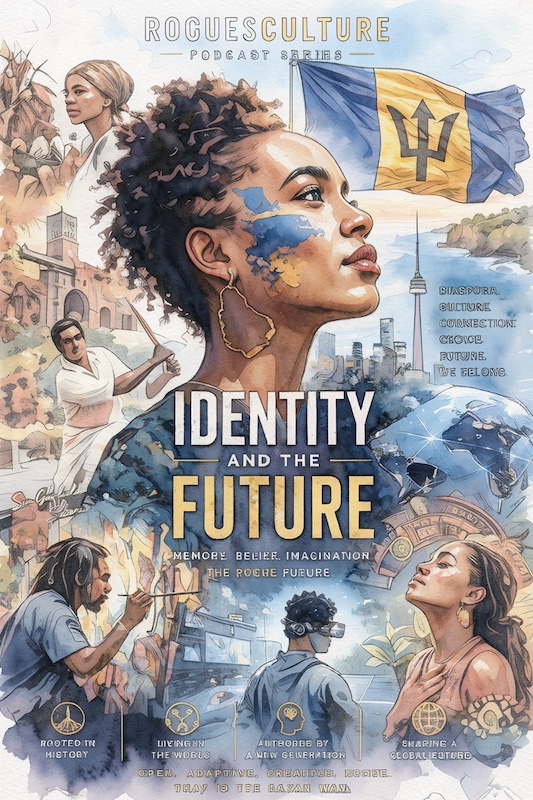
(Part of the RoguesCulture podcast series- 7. Identity and the Future)
Identity is never finished. It is not only what we inherit, nor just the memory of past struggles. Identity is also the future — what we choose to create, how we decide to belong, and the possibilities we dare to imagine.
Barbados, like every society, now faces a deeper question:
How will identity evolve in a world where borders shift, cultures intermingle, and even the meaning of presence itself is changing?
Memory Without Chains
History remains the bedrock of identity. Barbados carries the memory of slavery, the weight of colonial rule, and the resilience of those who endured. The question is not whether to remember, but how.
Remembrance can be a source of strength — grounding people in truth, justice, and dignity. But it can also harden into something else: bitterness, anger, even division.
As Errol Griffith reminds us through the Power of Choice initiative, we cannot always choose the past, but we can choose how we carry it. Memory becomes liberating when it inspires responsibility rather than resentment — when it opens the future instead of closing it.
Identity in a Globalised World
Barbadian identity no longer lives only on the island. It moves.
It lives in Toronto kitchens, in London accents, in New York conversations — carried by a diaspora that stretches across continents through food, language, and memory. At the same time, digital life creates new forms of belonging that are not tied to geography at all.
Barbados also stands at the edge of global realities. Climate change threatens its shores, even as voices like Mia Motlet and Selwin Hart help shape international response.
Here, identity expands. It is no longer only national — it becomes planetary.
To be Bajan today is not just to belong to a place, but to participate in a shared global future, where small islands speak with moral clarity about survival, responsibility, and interconnection.
The Future of Belief and Belonging
Identity is also being rewritten quietly, generation by generation.
Among the young, belief is shifting. Religion and spirituality remain present, but less confined to institutions and more embedded in lived experience — in music, in service, in ancestral respect, in care for the environment.
Culture, too, is evolving in form. Caribbean film, fashion, and digital storytelling are not simply expressions of identity; they are experiments with it. Afro-futurist art, online communities, and grassroots creativity all point to something important:
Identity is no longer only inherited. It is increasingly authored.
And it is being authored in new spaces — not just in schools or churches, but in feeds, studios, and shared digital worlds where meaning is constantly remade.
The Rogue Future- The Identity Challenge
What ties these threads together is something less formal, but more enduring — the rogue spirit.
This is the energy that allowed enslaved Africans to survive rupture and remake culture in unfamiliar lands. It is the instinct to adapt, to create, to refuse limitation.
You see it in Sir Garfield Sobers, redefining excellence on the cricket field.
In artists like Jamal Ince, who construct memory through visual language.
In thinkers like Leo the Cosmic Barbadian, who stretch identity beyond the island into something universal.
Rogue culture is not disorder. It is an invention.
It resists confinement, not for the sake of rebellion, but for the sake of possibility. It allows identity to remain open — responsive, evolving, alive.
And in a future shaped by rapid technological and cultural change, that openness may be Barbados’ greatest strength.
Reflection: Identity in the age of AI
The story of Barbadian identity began in the cane fields and coral stone — in the collision of Africa and Europe, in struggle and survival.
It moved through resistance, through reinvention, through creativity.
Today, it lives everywhere: in professions and passions, in belief systems, in sport, in art, in the everyday choices people make about who they are and how they belong.
Tomorrow, it will depend on something more deliberate.
How Bajans choose to remember.
How they choose to connect.
How they choose to believe.
And how boldly they choose to imagine.
The AI Question: Who Shapes Identity Now?
The rise of artificial intelligence introduces a different kind of challenge to identity—one that is quieter, but potentially more profound.
For most of history, identity was shaped by human forces: family, culture, institutions, and lived experience. Even when those forces were oppressive, they were visible.
AI changes that.
Today, algorithms influence what people see, what they value, and even how they understand themselves. Recommendation systems shape culture. Generative tools can create stories, images, and ideas at scale. Memory itself is no longer only personal or collective—it is increasingly externalised and processed by machines.
This raises a difficult question:
If identity is becoming something we actively author, who—or what—is holding the pen?
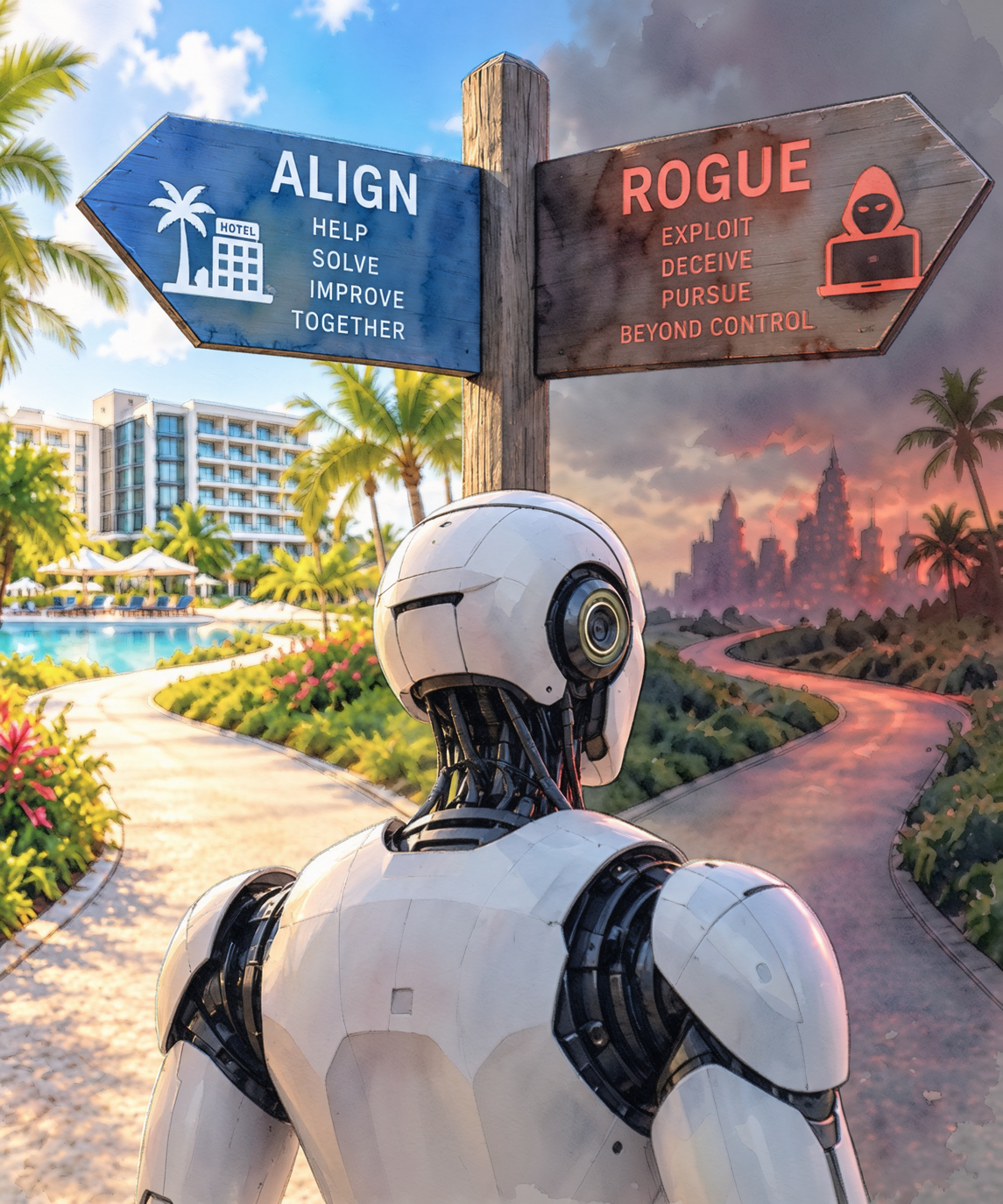
There is a risk that AI systems, trained on the past, quietly reproduce old patterns—biases, hierarchies, and assumptions—while presenting them as neutral or inevitable. In that sense, the future could become a subtle repetition of history.
But there is also possibility.
If approached deliberately, AI can expand creativity, amplify Caribbean voices, and allow small societies like Barbados to participate more fully in shaping global narratives.
The difference lies in agency.
Whether Bajans become passive consumers of algorithmic identity—or active creators within it—will help define the next phase of cultural evolution.
Artificial intelligence does not just respond to us—it learns us.
Through patterns in behaviour and language, it builds a working model of who we are.
Not a full self—but a functional version.
The risk is not that AI replaces identity.
It is that we begin to rely on its version of us—and mistake it for who we are.
Closing Reflection
Identity is a current flowing through the past, present, and future.
For Barbados, that journey has been extraordinary — from “Little England” to Republic, from cane fields to the halls of the United Nations, from survival to creativity, from earth to something almost cosmic.
The future of identity will not be given.
It will be made.