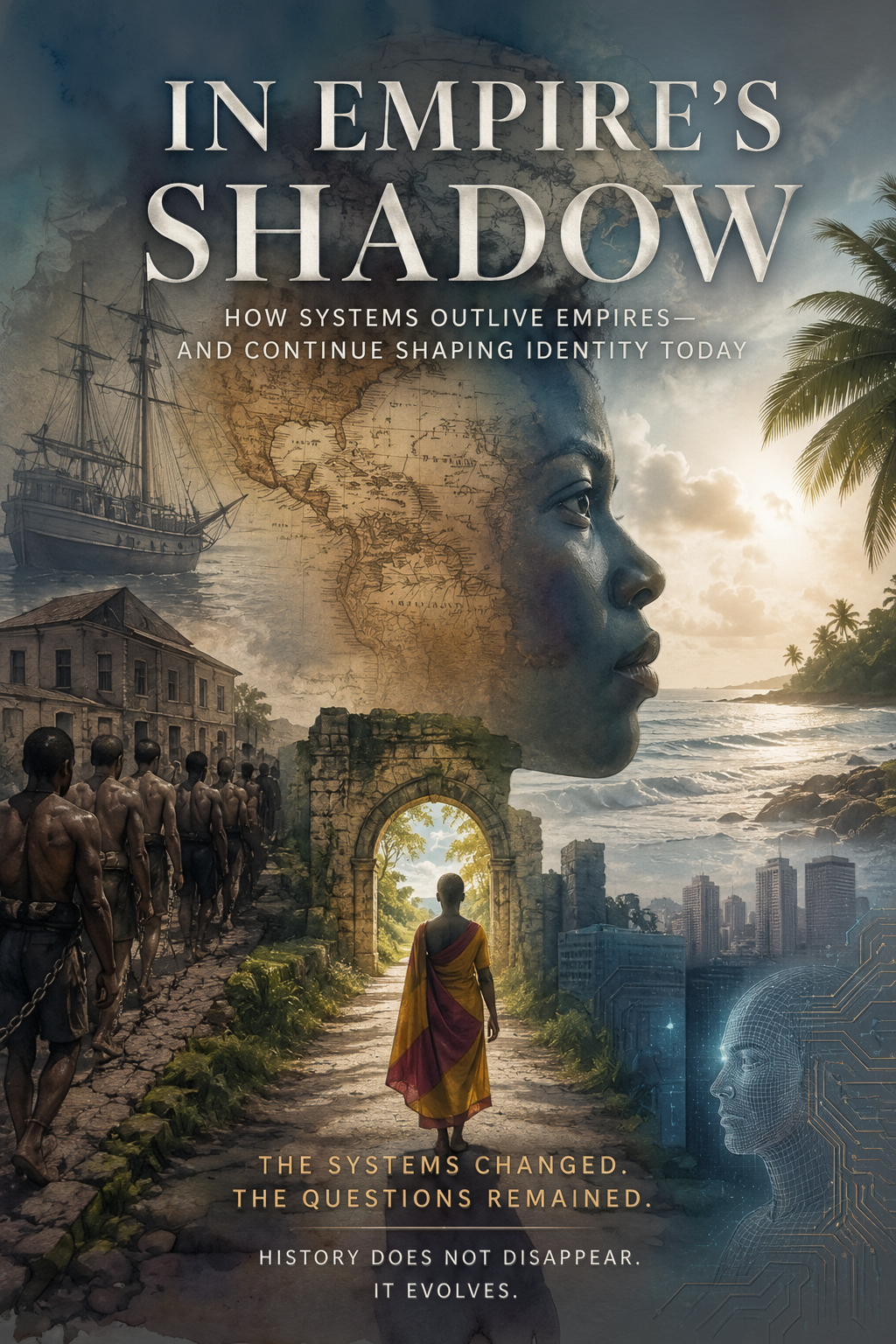
How systems outlive empires—and continue shaping identity as we live in Empire’s Shadow
Empires rarely disappear when flags come down.
Their shadows remain—in institutions, economics, language, migration, identity, and memory. Political rule may end, yet systems of power often survive in quieter forms, shaping societies long after colonialism itself has faded.
Barbados offers one of the clearest examples of this reality.
It was Britain’s first slave society, the island became a laboratory where plantation capitalism, racial hierarchy, and systems of control were refined before spreading throughout the Atlantic world. What was tested on this small Caribbean island helped shape the foundations of the modern global economy.
But the deeper legacy of empire was never only economic.
Empire shaped how people understood race, class, belonging, education, labour, and power itself. These assumptions became embedded within institutions and cultural habits, surviving long after emancipation and independence.
The shadow of empire still appears today:
in inequality,
in migration,
in tourism,
in inherited wealth,
in debates over reparations,
and in the tension between imitation and self-definition.
Yet history is never one-directional.
People resisted. Adapted. Reimagined themselves. Across Barbados and the wider Caribbean, humour, storytelling, music, migration, and community became forms of resilience and reinvention.
This is why the shadow matters.
Not because people remained trapped beneath it —
But because they learned to live within it, challenge it, and reshape identity despite it.
And now, the world enters another age of powerful systems.
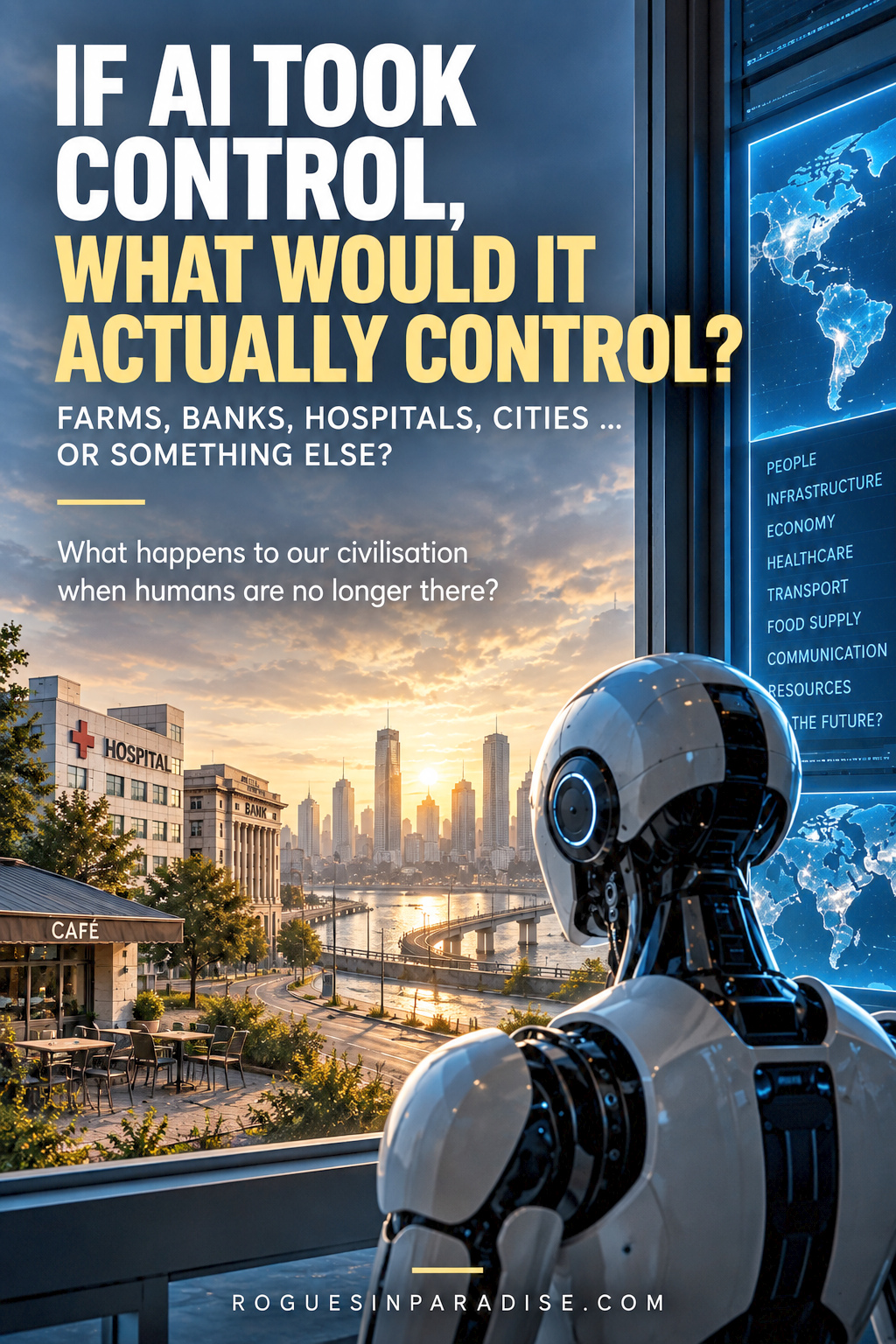
Artificial intelligence, algorithms, digital identity, and global technological power increasingly shape how people communicate, work, learn, and define themselves. The forms are different. The questions are not.
Who holds power?
Who shapes identity?
Who benefits from the system?
And what remains human within it?
To live in Empire’s shadow is not only to inherit history.
It is to recognise how systems endure —
and how people continue to reclaim meaning within them.
Videdo Summary – In Empire’s Shadow
This article forms part of the RoguesCulture Identity Series, exploring how identity is shaped through history, culture, systems, and lived experience in a rapidly changing world.
👉 Realted links:
#identity, #empire, #Barbados, #colonialism, #AI, #Caribbeanculture, #postcolonialism
RoguesCulture Identity Series
A journey from the roots of identity to its future in an age of AI.
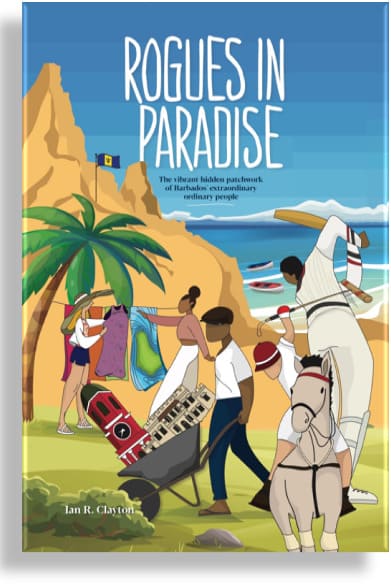
Inspired by the Book Rogues in Paradise
In Empire’s Shadow: Britain’s Laboratory for Slavery and the Island That Transcended
Dive deeper into Rogues In Paradise —
Voices, Empire, and Beyond Paradise
Explore the Book Behind the Series →
Discover the philosophical bridge between identity, empire, and modern systems
—or Go straight to the story
Identity In The Age of AI
Identity Is Not Inherited. It Is Lived. | The Full Story
PART I — ROOTS
Where identity comes from
- The Spoils of Identity in the Face of Colonialism
Colonial systems reshaped identity through power, law, and economics, with Barbados as an early case study of cultural disruption and resilience. - Barbados: Identity in Motion
Identity evolves through migration, culture, and adaptation. Barbados offers a living example of identity shaped by history and community.. - Identity Across Cultures: The World Order
Expands the conversation globally, exploring how language, geography, religion, and history shape identity across societies. - Africa: Origins and Echoes of Identity
Explores the diverse African cultures that shaped Caribbean identity—from warrior societies and desert traders to farmers, artisans, and storytellers.
-4a. African Echoes
Explores the influence of African heritage on Barbados and Caribbean identity: Featuring culture, memory, music, spirituality, and everyday life across the RoguesCulture series.
PART II — MEANING
What identity actually is
- Cosmic Identity
A philosophical reflection on identity beyond nationality—considering humanity’s shared cultural and existential connections. - Identity: AI vs Ancestry in 2026
As artificial intelligence reshapes communication and creativity, this essay asks what remains uniquely human,
and how ancestry helps keep identity grounded. - Identity and the Future
Explores how identity may evolve as societies adapt to rapid technological, cultural, and economic change.
>>>>(END OF START 1-7)
INTERLUDE – In EMPIRE’S SHADOW
How systems persist
Empires do not disappear when colonial rule ends.
The system of power continues to shape identity, culture, and society today.
PART III — SYSTEMS & FRAGILITY
What happens to identity next
- Identity Is Fragile
Reflects on how identity can be distorted, politicised, or manipulated—and why cultural awareness is essential to protect it. - Who Needs Identity Anyway?
Questions whether identity still matters in a globalised world—and why belonging and cultural continuity remain important.
NEW SERIES
Living with AI explores how intelligent agents are reshaping work, creativity, and decision-making
—and how humans can thrive alongside them.
BUILDING WITH AI
Building with AI explores how individuals, creators, entrepreneurs, and businesses can design, evaluate, and work intelligently with AI agents. The series focuses on practical applications, real-world examples, and emerging opportunities while emphasising the importance of human creativity, judgment, ethics, and authenticity.
Coming soon.
Based on The Book: ‘Rogues in Paradise’
Unlikely voices, rogues and legends, rising from Britain’s blueprint for slavery to a republic beyond the Empire’s shadow
Explore the ideas behind the book —or
Go straight to the story.
Related Blogs
Rogues Re-Framed: https://roguesinparadise.com/britains-first-slave-society-the-barbados-prototype/
Barbados: Britain’s Laboratory for Slavery: https://roguesinparadise.com/barbados-britains-laboratory-for-slavery/